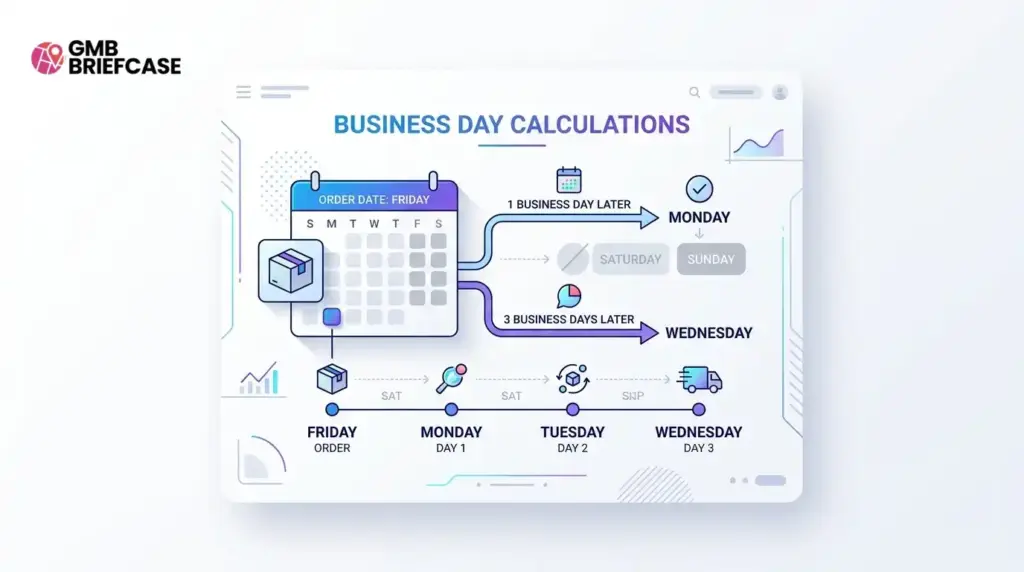
A business day is any working day a company is open and operating, usually Monday through Friday, excluding weekends and public holidays. In most cases, one business day means an 8 hour work window, but the exact cutoff depends on the company, country, and industry.
For local SEO agencies and SaaS teams, this matters because “1 to 3 business days” is not just calendar language, it affects client SLAs, reporting deadlines, campaign delivery, support response times, and billing expectations. If you manage multiple locations, review workflows, or Google Business Profile operations, you need a clear business day framework that removes ambiguity and prevents missed deadlines.
This guide breaks down exactly how business days work, how to calculate them across regions, and where they affect shipping, banking, and service operations. It also gives you practical examples you can use in agency client communication and internal workflow planning.
What Is a Business Day?
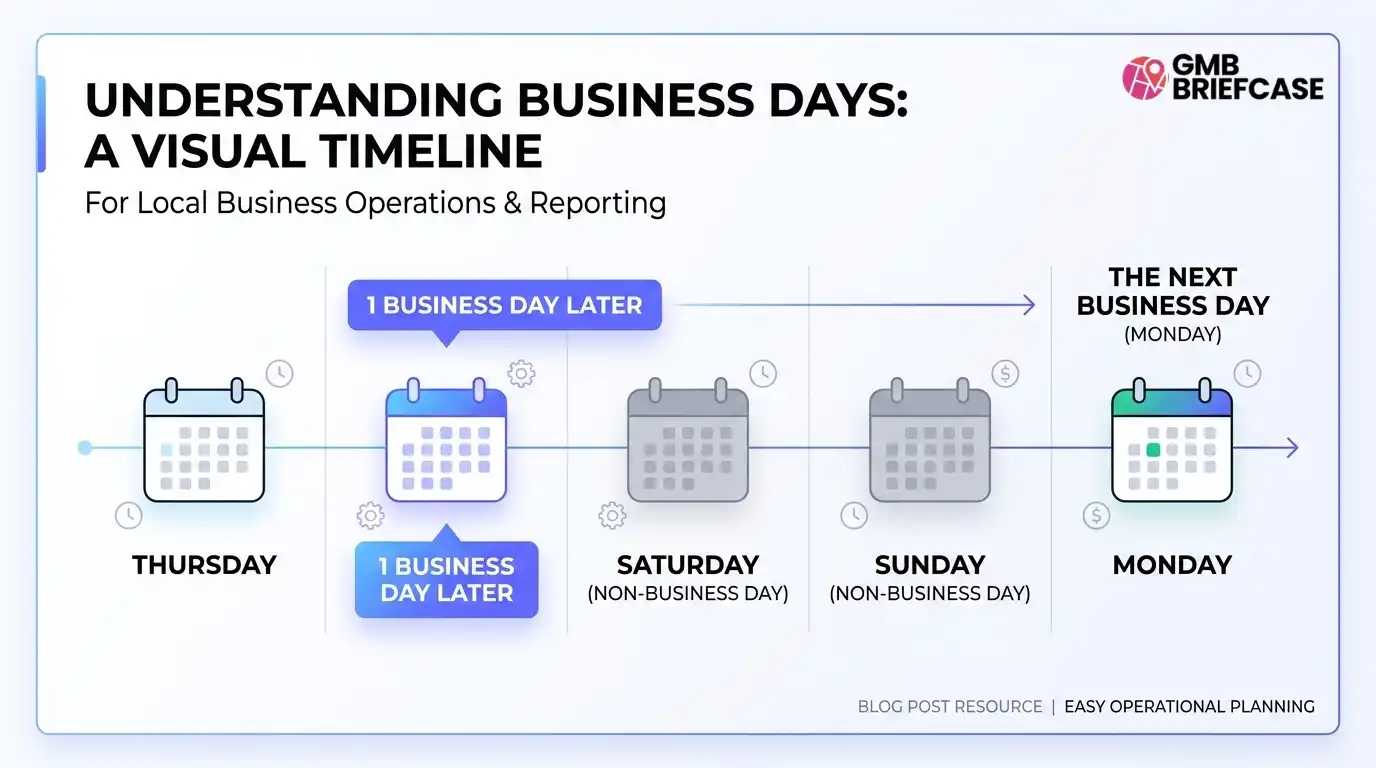
A business day is any day a company operates under normal business hours. In most countries, that means Monday through Friday, with weekends and public holidays excluded.
For agencies, this matters because business-day language is often used in contracts, onboarding emails, support replies, and delivery timelines. If the definition is vague, expectations become vague too.
Simple definition
| Aspect | Meaning |
| Business Day | Monday through Friday |
| Business Hours | Typically 9 AM to 5 PM |
| Exclusions | Weekends and public holidays |
How Long Is 1 Business Day?
One business day usually means one full working day inside the standard workweek. In practical terms, it often maps to an 8-hour window, but the exact timing depends on the company, region, and operating hours.
If someone places a request on Thursday, 1 business day usually means Friday. If the request is placed on Friday, the next business day is usually Monday, unless weekend coverage is part of the service.
For SaaS teams and local SEO agencies, this is especially important when setting delivery promises, onboarding timelines, and support SLAs. Clear language prevents confusion and reduces back-and-forth.
How Long Is 2, 3, or 5 Business Days?
Two business days means two working days, not two calendar days. Three business days means three weekdays. Five business days usually equals one standard workweek, Monday through Friday.
That difference matters in client communication. A promise like “we’ll respond in 3 business days” should always be tied to an internal process, not left open to interpretation.
Quick examples
- 2 business days from Tuesday usually lands on Thursday.
- 3 business days from Wednesday usually lands on Monday.
- 5 business days from Monday usually lands on Friday.
If holidays or weekends appear in the middle, the timeline shifts forward accordingly.
Business Day vs Work Day vs Business Hours
These terms are related, but they are not identical. A business day is the date itself, a work day usually means a day someone is actively working, and business hours are the specific hours inside that day.
For local SEO agencies, that difference matters when promises are tied to client-facing timelines. A task may be assigned on a business day but still wait until the next block of business hours begins.
Is Saturday a Business Day?
Usually, no. In most markets, Saturday is not counted as a business day.
Some companies and regions do treat Saturday as a working day, so this should always be defined by the service policy or the country involved. If you work with international clients, do not assume the same calendar applies everywhere.
Business Days Across Different Countries
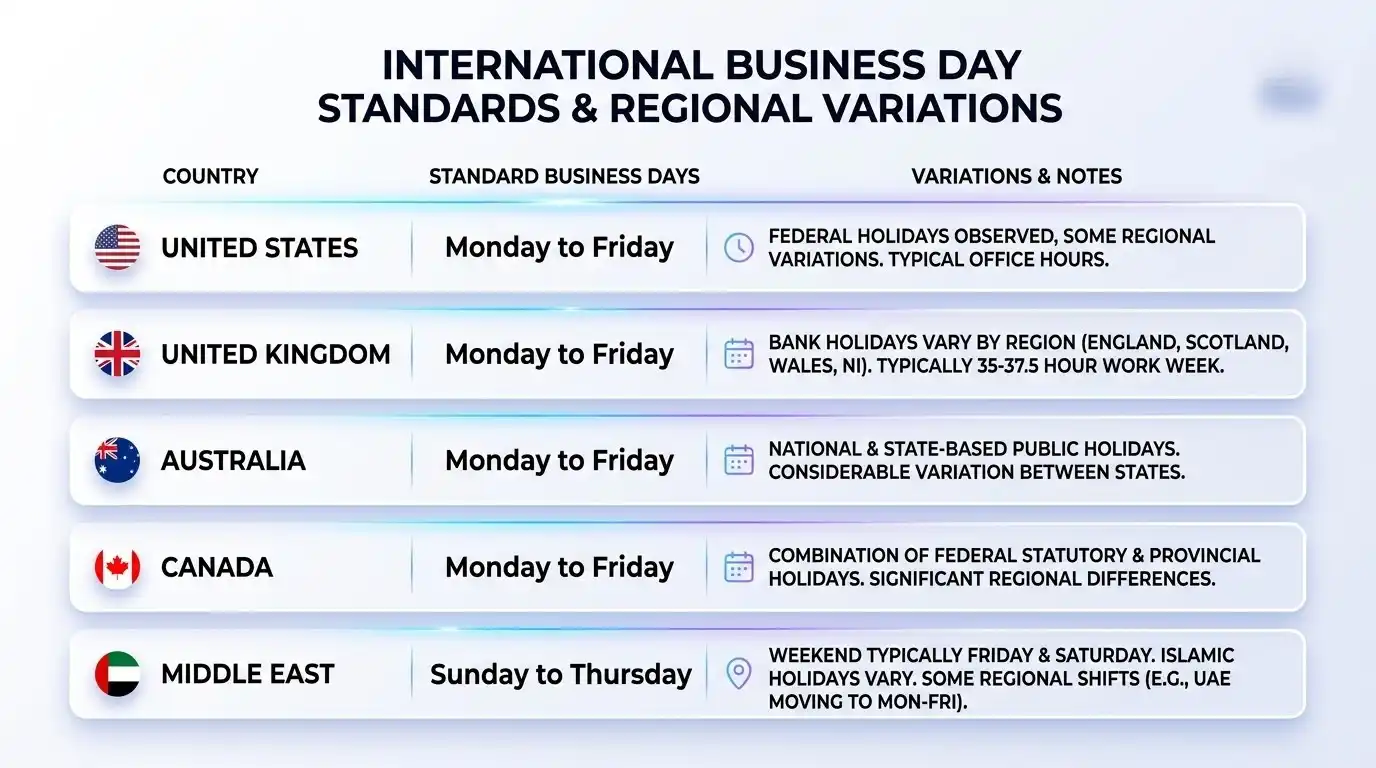
The concept of a business day changes by region. In the United States and Canada, the standard is Monday through Friday. In parts of the Middle East, the workweek may run Sunday through Thursday.
Regional examples
| Country or Region | Business Days | |
| United States | Monday through Friday | Standard business hours, holidays excluded |
| United Kingdom | Monday through Friday | Some institutions close early on Fridays |
| Australia | Monday through Friday | Some businesses operate on Saturdays |
| Canada | Monday through Friday | |
| Middle East | Sunday through Thursday | Friday is often treated as weekend |
Why Does the Length of a Business Day Matter?
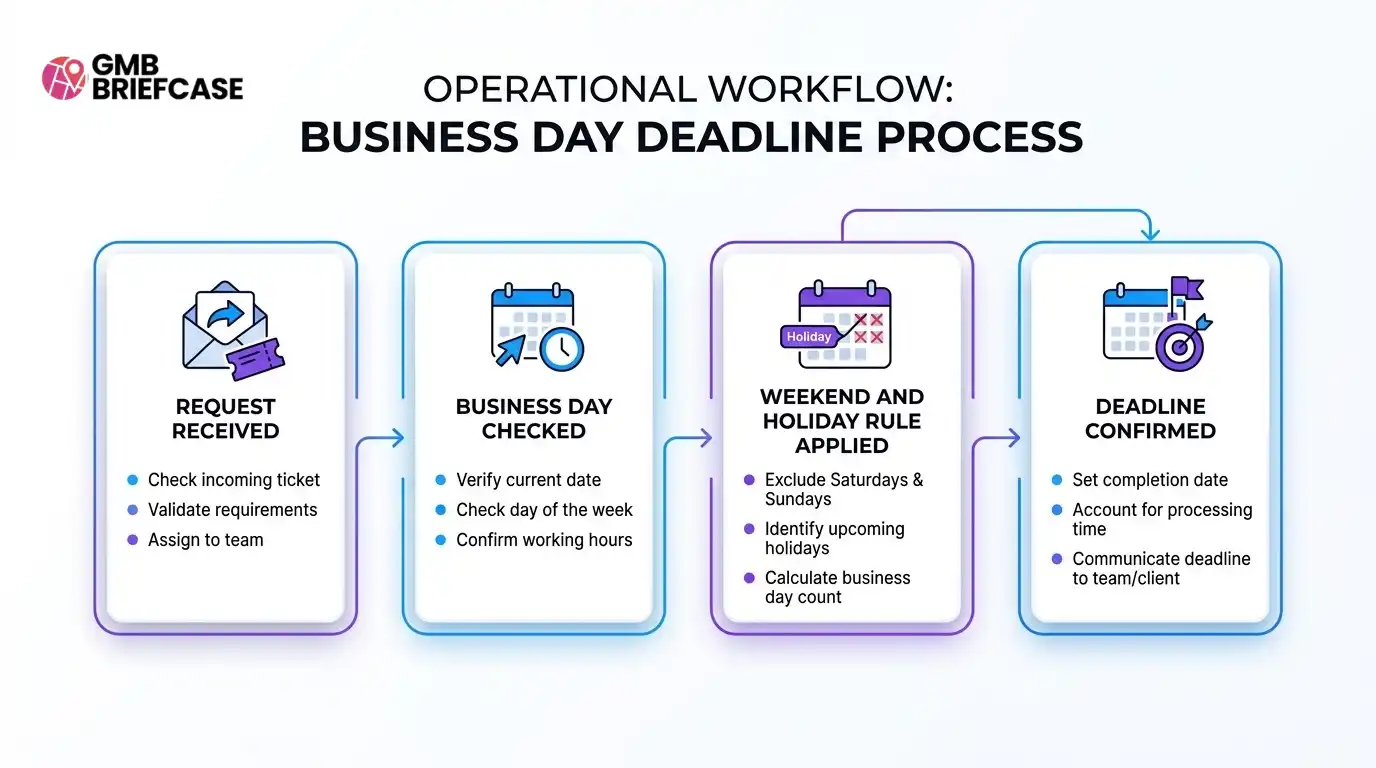
Business days affect shipping, banking, refunds, support response times, and campaign delivery. When a company says “1 to 3 business days,” the real timing depends on weekends, holidays, and the provider’s operating calendar.
For agencies and SaaS teams, this also affects Google Business Profile workflows, review response SLAs, and client reporting. The clearer your business-day definition, the fewer misunderstandings you create.
How Business Days Are Calculated for Shipping and Banking
Shipping companies and banks usually exclude weekends and public holidays from their timelines. That is why a request submitted late on Friday may not move until Monday.
For example, “3 business days” from Friday often lands on Wednesday, not Monday. This is why agencies should avoid vague promises and instead define turnaround times with a specific clock and cutoff.
Common Questions About Business Days
Is Friday a Business Day?
Yes. Friday is usually a business day unless it is a public holiday.
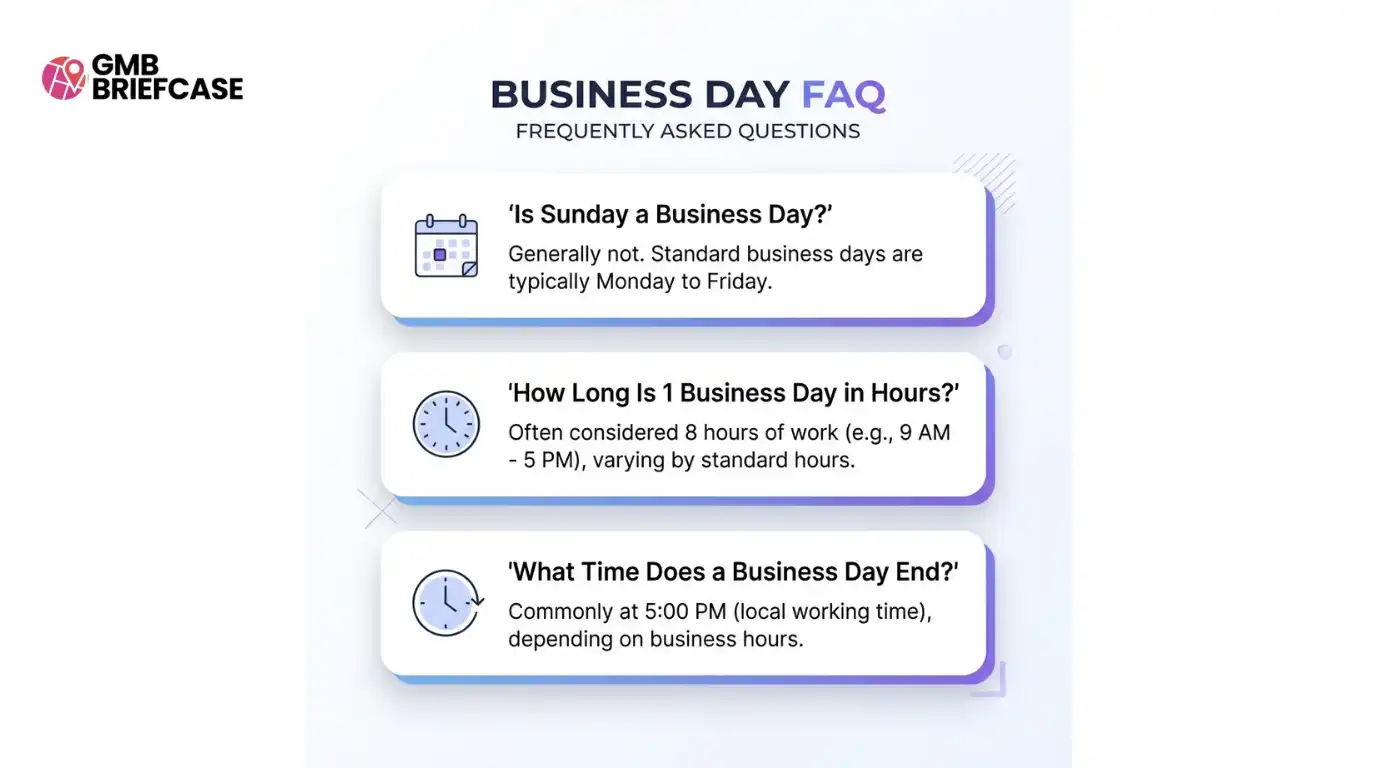
Is Sunday a Business Day?
No. Sunday is not a business day for most companies.
How Long Is 1 Business Day in Hours?
One business day is usually 8 hours, often from 9 AM to 5 PM, but exact hours can vary by company and region.
How Long Is 5 Business Days?
Five business days usually means Monday through Friday, or one standard workweek.
How Are Business Days Calculated for Shipping?
Shipping timelines usually exclude weekends and public holidays. A 3 business day shipment counts only working days, not Saturdays or Sundays.
Does 1 business day mean today?
Usually no. It normally means the next working day.
Is 1 business day the next day?
Only if the next calendar day is also a business day.
What time does a business day end?
Often around 5 PM local time, but the exact cutoff depends on the company.
How should agencies define business days in client SLAs?
Agencies should define the region, cutoff time, holidays, and weekend coverage clearly. This prevents delays, improves client communication, and makes delivery timelines easier to manage.